The bar is closing. It’s well past midnight in the small seaside town of Ongsan, and Dong-baek is wiping down the last table at her humble camellia bar. Outside, the autumn wind carries the scent of salt and approaching winter.
This is When the Camellia Blooms (동백꽃 필 무렵)—a drama that doesn’t need grand palaces or corporate towers to tell its story. Instead, it finds beauty in a single mother’s struggle, a goofy mailman’s unwavering love, and the small-town gossip that makes and breaks reputations.
And in this world, there’s one dish that appears when characters need warmth, comfort, and a fresh start: kongnamul gukbap—bean sprout soup with rice.
The Drama: Small Town, Big Hearts
When the Camellia Blooms swept Korea in 2019, winning the Grand Prize (Daesang) at the KBS Drama Awards. Gong Hyo-jin plays Dong-baek, a single mother who opens a small bar called “Camellia” in a judgmental coastal town. Kang Ha-neul is Hwang Yong-sik, the endearingly persistent mailman who falls for her despite everyone’s warnings.
The drama masterfully weaves romance with a murder mystery, but at its heart, it’s about belonging. Dong-baek serves drinks to the townspeople who gossip about her, pours soju for men who look down on her, and somehow finds grace in every interaction.
In Korean small towns, kongnamul gukbap is more than food—it’s a late-night ritual. After drinking sessions, before dawn breaks, people stumble into 24-hour restaurants for this simple soup. It’s the great equalizer: businessmen and fishermen sit side by side, silently spooning broth and bean sprouts, preparing to face another day.
For Dong-baek, who spends her nights serving others, kongnamul gukbap represents rare moments of being cared for instead of caring.
The History of Kongnamul Gukbap
What Is Kongnamul Gukbap?
Kongnamul (콩나물) means “bean sprouts”—specifically, soybean sprouts with their characteristic yellow heads. Gukbap (국밥) literally translates to “soup rice,” a category of Korean dishes where rice is either served in or alongside hot soup.
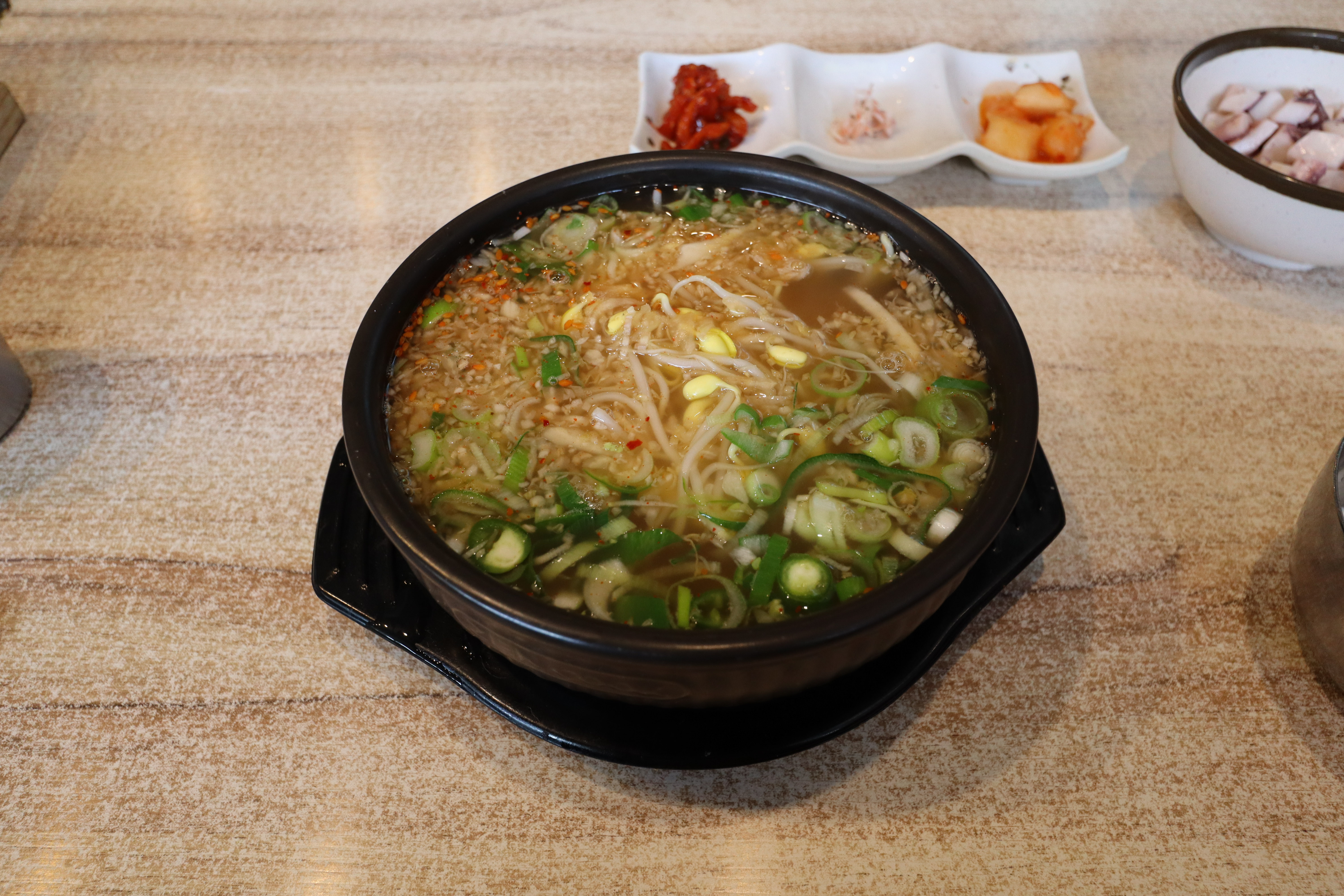
Kongnamul gukbap is the beautiful simplicity of Korean cuisine distilled: a clear, anchovy-based broth loaded with bean sprouts, served piping hot over rice. Some versions crack a raw egg into the bowl, letting the heat gently cook it into silky ribbons.
The Jeonju Connection
While kongnamul gukbap exists throughout Korea, the most famous version comes from Jeonju (전주), the culinary capital of Korea. Jeonju-style kongnamul gukbap is known for its deep, complex broth made from dried anchovies, kelp, and sometimes beef bones.
| Regional Style | Characteristics |
|---|---|
| Jeonju | Rich anchovy broth, generous toppings |
| Busan | Lighter broth, more garlic |
| Seoul | Often served as banchan-style soup |
| Coastal towns | Added seafood like clams |
The dish has humble origins. Bean sprouts are inexpensive and nutritious, sprouted from soybeans in just a few days. During the Joseon Dynasty and through periods of hardship, kongnamul provided essential vitamins and protein for common people.
The Hangover Cure
Koreans call it haejang (해장)—the morning-after cure. Kongnamul gukbap is considered one of the best haejang foods because:
- Asparagine in bean sprouts helps the liver process alcohol
- Hot broth rehydrates and warms the stomach
- Rice provides gentle carbohydrates
- Simplicity is easy on sensitive stomachs
After a night at Dong-baek’s bar, many of her customers would have sought exactly this: a steaming bowl of forgiveness before facing their families.
The Recipe: Kongnamul Gukbap
Ingredients
- Korean soybean sprouts (kongnamul) (400g, with yellow heads) Amazon →
- Dried anchovies for broth (large size, 10-12 pieces) Amazon →
- Dried kelp (dashima) (2-3 pieces, 4-inch squares) Amazon →
- Korean soup soy sauce (gukganjang) (for seasoning) Amazon →
- Korean fish sauce (aekjeot) (optional, for depth) Amazon →
- 4 cups cooked white rice
- 4 eggs (optional)
- 4 green onions, chopped
- 4 cloves garlic, minced
- Salt to taste
- 8 cups water
For Serving:
- Korean red pepper flakes (gochugaru) (for sprinkling) Amazon →
- Kimchi (essential side dish) Amazon →
- Pickled radish
Equipment
- Korean earthenware pot (ttukbaegi) (for serving hot) Amazon →
- Large pot for broth
- Strainer or mesh bag for anchovies
Video Tutorial
Video by Maangchi
Instructions
Step 1: Clean the Bean Sprouts
Rinse the kongnamul thoroughly in cold water. Remove any brown or wilted pieces. The tails can be left on—they add texture—but trim any roots that look damaged. Drain well.
Chef’s tip: Never lift the lid while cooking bean sprouts, or they’ll develop a “beany” smell. This is crucial for clean-tasting broth.
Step 2: Make the Anchovy Broth
Remove the guts and heads from dried anchovies (this prevents bitterness). Place anchovies and kelp in a pot with 8 cups of water. Bring to a boil over medium-high heat, then reduce to medium and simmer for 15 minutes.
Strain the broth and discard the solids. You should have a clear, golden liquid with a subtle ocean aroma.
Step 3: Cook the Bean Sprouts
Return the broth to the pot. Add the cleaned bean sprouts and cover tightly with a lid. Bring to a boil, then reduce heat to medium.
Important: Do not open the lid for 10 minutes. Let the sprouts steam-cook undisturbed. This prevents the unpleasant smell that comes from partially cooked sprouts.
Step 4: Season the Soup
After 10 minutes, remove the lid. The sprouts should be tender but still have a slight crunch. Add:
- 2 tablespoons gukganjang (soup soy sauce)
- 1 teaspoon fish sauce (optional)
- Minced garlic
- Salt to taste
Simmer for another 3-4 minutes to let the flavors meld.
Step 5: Prepare Individual Bowls
For traditional gukbap style: Place a scoop of hot rice in each serving bowl. Ladle the hot soup and bean sprouts over the rice.
For the egg variation: Crack a raw egg directly into the piping hot soup. The residual heat will cook it into silky ribbons. Alternatively, poach the egg separately.
Step 6: Garnish and Serve
Top with chopped green onions and a sprinkle of gochugaru if you like heat. Serve immediately while bubbling hot, with kimchi and pickled radish on the side.
For extra authenticity, serve in a ttukbaegi (Korean earthenware pot) that retains heat and keeps the soup bubbling at the table.
FAQ
Can I use mung bean sprouts instead of soybean sprouts?
While you can substitute in a pinch, the flavor profile will change significantly. Soybean sprouts (kongnamul) have distinctive yellow heads and a nuttier, more robust taste. Mung bean sprouts (sukju) are thinner, more delicate, and lack the “meaty” quality that makes this dish satisfying. For authentic kongnamul gukbap, seek out Korean soybean sprouts at Asian markets.
Why does my bean sprout soup smell weird?
The “beany” smell occurs when bean sprouts are partially cooked. The solution is simple: never lift the lid during the first 10 minutes of cooking. The continuous steam helps cook the sprouts evenly and eliminates the enzyme that causes the off-odor. Start with cold broth, add sprouts, cover, and resist the temptation to peek.
How do I store leftover kongnamul gukbap?
Store the broth and bean sprouts separately from the rice to prevent the rice from becoming mushy. The soup keeps well in the refrigerator for 2-3 days. Reheat on the stovetop until boiling, then add fresh rice. The flavors actually deepen overnight, making next-day gukbap even better.
Is kongnamul gukbap healthy?
Yes, it’s considered one of the healthier Korean soups. Bean sprouts are low in calories but high in vitamin C, fiber, and protein. They contain asparagine, an amino acid that supports liver function—which is why Koreans swear by this dish for hangovers. The simple broth is gentle on digestion, and you can control sodium by adjusting the soy sauce.
What makes Jeonju-style kongnamul gukbap different?
Jeonju-style is known for its richer, more complex broth, often made with beef bones in addition to anchovies. It’s typically served with a raw egg that cooks in the hot soup, and comes with a wider array of banchan (side dishes). The rice is also often mixed directly into the broth, creating a porridge-like consistency. In Jeonju, there are entire streets dedicated to kongnamul gukbap restaurants.
Can I make this vegetarian?
For a vegetarian version, replace the anchovy broth with a vegetable or mushroom-based broth. Use shiitake mushrooms, dried radish, and kelp to create umami depth. Skip the fish sauce or substitute with soy sauce. The bean sprouts themselves provide plenty of protein and substance.
What side dishes go best with kongnamul gukbap?
Traditional accompaniments include: baechu kimchi (napa cabbage kimchi), kkakdugi (cubed radish kimchi), pickled radish, seasoned seaweed, and salted squid or shrimp. The contrast of crisp, tangy kimchi with the mild soup is essential to the experience. In small-town restaurants like those in When the Camellia Blooms, you’d also find simple namul (seasoned vegetables) on the table.
Make It Tonight
There’s something deeply comforting about kongnamul gukbap that transcends culture or cuisine. It’s the kind of dish that doesn’t demand your attention—it simply arrives, hot and unpretentious, ready to restore whatever the night has taken from you.
In When the Camellia Blooms, Dong-baek spends her life serving others while asking for little in return. Kongnamul gukbap is the meal that serves her back: warm broth on cold nights, simple nourishment after long hours, a reminder that sometimes the most healing things come in humble packages.
Tonight, whether you’re recovering from a celebration, seeking comfort after a hard day, or simply curious about Korean cuisine, let this soup work its quiet magic.
오늘 밤, 동백꽃 필 무렵을 보면서 직접 만든 콩나물국밥 한 그릇으로 몸과 마음을 녹여보는 건 어떨까요?
Hero image: “Kongnamul gukbap” by Ryuch, CC BY-SA 4.0, via Wikimedia Commons
This post contains affiliate links. As an Amazon Associate, I earn from qualifying purchases at no extra cost to you.
Part of our K-Drama Kitchen series—cooking the dishes that made us hungry while watching.


