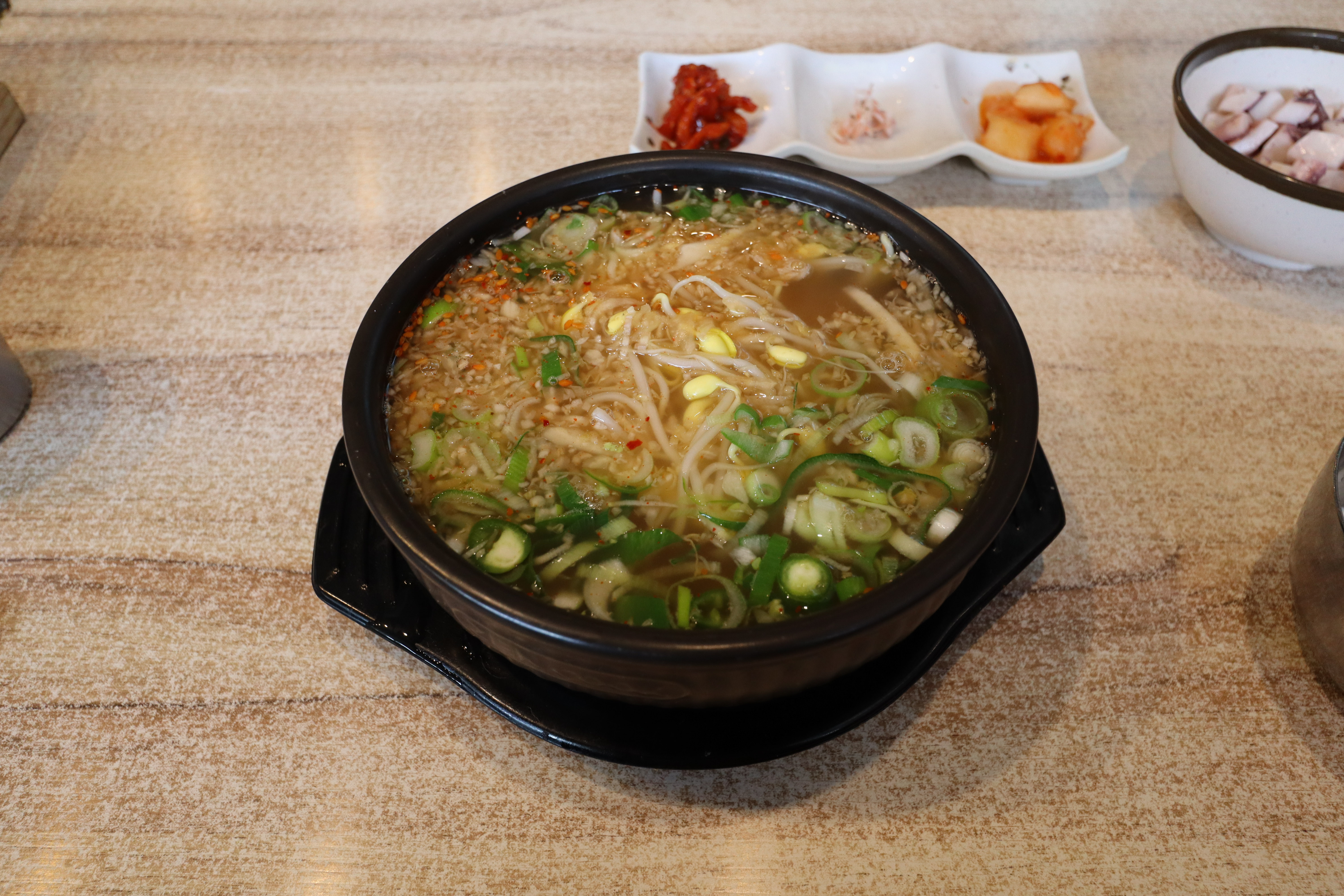
The Drama: Where Soup and Sacrifice Meet
In Start-Up (스타트업), the 2020 drama that captured hearts across the globe, there’s a small restaurant that serves more than food. It serves hope.
Seo Dal-mi (Bae Suzy) dreams of becoming Korea’s Steve Jobs. Her sister, Won In-jae, inherited wealth. But Dal-mi has something her sister doesn’t: their grandmother’s seolleongtang restaurant.
Halmeoni (Kim Hae-sook) runs her modest soup shop in the traditional market. Every day, she wakes before dawn to prepare the broth—boiling ox bones for hours until the liquid turns milky white. She does this not for profit, but for Dal-mi. For the letters she wrote pretending to be someone else. For the years of sacrifice that only grandmothers understand.
The soup itself becomes a character in the drama. When Dal-mi is lost, she returns to the restaurant. When she needs clarity, she sits alone with a bowl of seolleongtang, steam rising like the fog of uncertainty in her life. When Han Ji-pyeong (Kim Seon-ho) reveals the truth about those letters, it happens near this very restaurant—the place where lies and love became indistinguishable.
Start-Up taught us that success isn’t measured in funding rounds or IPOs. Sometimes, it’s measured in bowls of soup served with unwavering faith.
The History of Seolleongtang
What Is Seolleongtang?
Seolleongtang (설렁탕) is a milky-white ox bone soup that’s been simmering in Korean history for over 500 years. Unlike other Korean soups with their clear broths or red pepper bases, seolleongtang gets its distinctive cloudy appearance from the collagen and fat released during the long cooking process.
The soup is served simply—just the broth and thin slices of beef, with a side of rice and kimchi. The magic? You season it yourself at the table with salt, black pepper, chopped green onions, and sometimes minced garlic. Every bowl is personalized.
The Royal Origins
The most accepted origin story traces seolleongtang back to the Joseon Dynasty (1392-1897) and a king’s compassion.
King Seongjong participated in Seonnongje (선농제), an annual royal ritual where the king himself would plow the first furrows of the year to pray for a bountiful harvest. After the ceremony, the sacrificial ox would be boiled in massive cauldrons to feed everyone present—from nobles to commoners.
The challenge: feed thousands with limited ingredients. The solution: boil the bones for hours to extract every bit of nutrition, creating enough soup for the masses. The name evolved from “seonnongtang” (soup from the Seonnong ritual) to “seolleongtang” for easier pronunciation.
The Mongolian Connection
An alternative theory suggests Mongolian origins. During the 13th-century Mongolian invasion of Korea, the conquerors brought sulen—a simple dish of boiled beef with green onions. Korean cooks adapted and refined this into what became seolleongtang.
| Era | Development |
|---|---|
| 13th Century | Mongolian sulen introduced to Korea |
| Joseon Dynasty | Seonnongje ritual establishes the dish |
| Early 1900s | First seolleongtang restaurants open in Seoul |
| Present Day | 24-hour seolleongtang shops dot Seoul’s landscape |
Why Seoul Claims This Soup
Seolleongtang is considered a local specialty of Seoul, where it’s been served for generations. The city’s famous Hadongkwan restaurant, established in 1939, still serves seolleongtang made the traditional way—in massive pots that never stop simmering.
The Recipe: Halmeoni’s Seolleongtang
This recipe honors the dedication of grandmothers everywhere who wake before dawn to feed their families. Traditional seolleongtang requires patience—there are no shortcuts to love.
Ingredients
- 1 kg (2.2 lbs) ox leg bones (ask your butcher to cut them)
- 500g (1 lb) beef brisket or shank
- 1 large onion, halved
- 6-8 cloves garlic
- 1 piece ginger (thumb-sized)
- Water (enough to cover bones, about 4-5 liters)
For Serving (per bowl):
- Steamed rice
- Sliced green onions
- Salt and black pepper
- Minced garlic (optional)
- Kimchi Amazon →
- Kkakdugi (cubed radish kimchi) Amazon →
- Korean coarse sea salt Amazon →
Equipment
- Large stock pot (at least 8 liters)
- Korean earthenware bowl (ttukbaegi) (optional, for serving) Amazon →
- Fine mesh strainer
- Slotted spoon
Video Tutorial
Video by Maangchi - The most trusted voice in Korean home cooking
Instructions
Day Before: Soak the Bones Place ox bones in a large bowl of cold water. Refrigerate overnight. This draws out blood and impurities, resulting in a cleaner broth.
Step 1: Blanch the Bones (30 minutes) Drain the soaked bones. Place them in your stock pot and cover with cold water. Bring to a boil over high heat. Boil vigorously for 10-15 minutes. You’ll see a tremendous amount of gray foam rise to the surface. Drain and rinse each bone under running water, scrubbing off any remaining residue. Clean the pot.
Step 2: First Boil (4-6 hours) Return the cleaned bones to the pot. Add the brisket or shank, onion, garlic, and ginger. Cover with fresh cold water (about 4-5 liters). Bring to a boil over high heat. Once boiling, reduce to a gentle simmer. Cover and cook for 4-6 hours.
Step 3: Remove the Meat After about 2-3 hours, check the brisket. When it’s tender (easily pierced with a chopstick), remove it and set aside. The bones continue simmering.
Step 4: Second Boil (6-8 more hours) This is where the magic happens. Continue simmering the bones. The broth will gradually turn from clear to cloudy to milky white. Keep the heat gentle—a rolling boil will make the broth greasy. Add hot water as needed to maintain the level. Total cooking time: 10-12 hours minimum.
Step 5: Strain and Season When the broth is rich and milky, remove the bones. Strain the broth through a fine mesh strainer. The broth should be naturally seasoned by the beef, but it will taste bland—this is intentional. Each person seasons their own bowl.
Step 6: Prepare the Meat Slice the reserved brisket thinly against the grain. Pick any meat off the bones and shred it.
Step 7: Serve Reheat the broth until piping hot. Ladle into bowls over sliced meat. Serve with a bowl of rice (many people add rice directly to the soup), chopped green onions, and the seasoning plate: salt, black pepper, minced garlic. Kkakdugi (cubed radish kimchi) is the traditional accompaniment.
FAQ
Why does seolleongtang take so long to make?
The milky white color comes from collagen, marrow, and fat slowly extracted from the bones. This process can’t be rushed—low, slow simmering for 10-12 hours is necessary to break down the connective tissue. Restaurant versions often simmer for 20+ hours in pots that are never emptied, with fresh bones added continuously.
Why is the soup served unseasoned?
This is the Korean philosophy of son-mat (손맛)—the taste of one’s hands. By allowing each person to season their own bowl, seolleongtang becomes personalized. Some prefer it salty, others add lots of pepper, and some mix in rice. It’s also practical: the same pot can feed people with different preferences.
What’s the difference between seolleongtang and gomtang?
Both are milky bone soups, but gomtang (곰탕) typically uses more variety of cuts (including head meat and intestines) and has a slightly more complex flavor. Seolleongtang focuses specifically on ox leg bones and brisket. The cooking method is similar, but purists will argue about subtle differences for hours.
Can I make seolleongtang in an Instant Pot or pressure cooker?
Technically yes—a pressure cooker can reduce the cooking time to 3-4 hours. However, traditionalists argue that the slow extraction produces a superior broth. If using a pressure cooker, cook on high pressure for 2-3 hours, then natural release.
What was the significance of the restaurant in Start-Up?
In Start-Up, the grandmother’s seolleongtang restaurant represents unconditional love and honest hard work—contrasting with the fast-paced, sometimes superficial world of tech startups. It’s where Dal-mi returns when she needs grounding, and it’s tied to the letters that Han Ji-pyeong wrote on her grandmother’s behalf.
Why do Koreans eat rice with seolleongtang?
Rice adds substance to the meal and helps balance the richness of the broth. Many Koreans add rice directly into the soup bowl, creating a satisfying rice soup (gukbap style). Others eat rice on the side, taking alternate bites.
What side dishes go best with seolleongtang?
The classic pairing is kkakdugi (cubed radish kimchi)—its crunchy texture and tangy-spicy flavor perfectly complement the mild, creamy soup. Regular kimchi works too. Some restaurants also serve danmuji (yellow pickled radish) and salted shrimp for extra seasoning.
Make It Tonight
Making seolleongtang is an act of love disguised as cooking. It’s 12 hours of simmering bones while life happens around you. It’s waking up to a kitchen that smells like someone’s grandmother lived there.
The next time you watch Start-Up, notice how the camera lingers on that small restaurant. Notice how the steam rises from the bowls. That’s not just soup—that’s every sacrifice made by those who loved us before we understood what sacrifice meant.
오늘 밤, 스타트업 정주행하면서 직접 만든 설렁탕과 함께하는 건 어떨까요?
This post contains affiliate links. As an Amazon Associate, I earn from qualifying purchases at no extra cost to you.
Hero image: “Korean Beef Soup” by 세훈 예 via Pexels
Part of our K-Drama Kitchen series—cooking the dishes that made us hungry while watching.