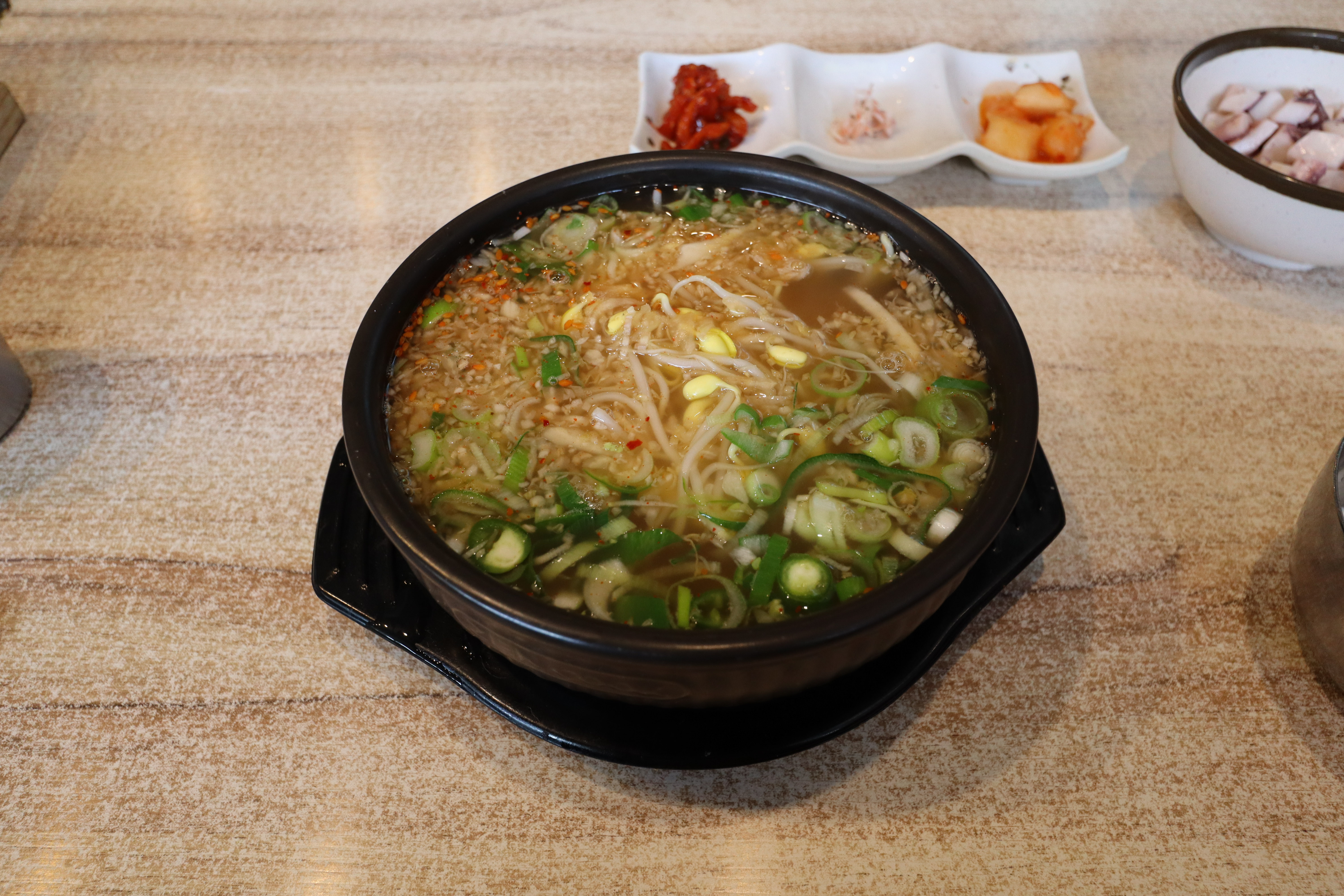
The Drama: When a Chaebol Heiress Tastes Real Love
The year was 2024, and the world stopped for Queen of Tears (눈물의 여왕).
With a record-shattering 24.85% viewership rating—surpassing even Crash Landing on You—this drama about Hong Hae-in, a cold retail empire heiress, and Baek Hyun-woo, her devoted husband from humble origins, became a global phenomenon. But beyond the tears, the plot twists, and Kim Soo-hyun’s devastating gaze, there was something else that captured audiences: the food.
Baek Hyun-woo isn’t just a husband. He’s a man who grew up in Yongdu-ri, a small village where his family runs a local grocery store. He knows how to cook. Not the performative cooking of a chaebol kitchen, but the real kind—the kind that steams up windows and fills homes with warmth.
When Hyun-woo makes sundubu jjigae, he’s not just feeding Hae-in. He’s offering her something she’s never had: comfort without conditions. The bubbling pot of soft tofu, the cracked egg slowly cooking in the spicy broth, the simple act of saying “eat”—these moments became some of the drama’s most memorable scenes.
The History of Sundubu Jjigae
What Is Sundubu?
Sundubu (순두부) literally means “pure tofu”—tofu in its most natural, unpressed state. Unlike the firm blocks you find in grocery stores, sundubu is silky, custard-like, and so delicate it barely holds its shape. It’s tofu before it becomes tofu.
The name jjigae (찌개) refers to a Korean stew, heartier than guk (soup) but served in smaller portions. Together, sundubu jjigae is a bubbling, spicy stew where the soft tofu becomes one with the fiery broth.
From Joseon Dynasty to LA Koreatown
Records from the Joseon dynasty archives mention early forms of sundubu dishes, though the modern sundubu jjigae we know evolved over centuries. Each region in Korea developed its own variation:
| Region | Specialty |
|---|---|
| Gangneung | Made with seawater for natural saltiness |
| Hamyang | Prepared with galbi (short ribs) and clams |
| Gyeongju | Famous for traditional stone-ground sundubu |
The dish gained international fame through an unexpected route: Los Angeles. In 1986, Monica Lee opened Beverly Soon Tofu in Koreatown—the first restaurant in the United States dedicated to sundubu jjigae. By the 1990s, Hee Sook Lee’s BCD Tofu House expanded into a national chain, introducing millions of Americans to the bubbling stone pots.
Why Sundubu Jjigae Is Comfort Food
In Korean culture, sundubu jjigae represents accessible warmth. Unlike elaborate dishes reserved for special occasions, it’s something you eat on a Tuesday night when you’re tired, on a cold morning when you need strength, or when you simply want to feel cared for.
The New York Times once described it as “a hearty brew of spicy broth and silken tofu… the ideal winter meal.” But for Koreans, it’s more than seasonal—it’s eternal comfort.
The Recipe: Baek Hyun-woo’s Sundubu Jjigae
This recipe captures the essence of the sundubu jjigae Hyun-woo might make—simple, homestyle, and deeply satisfying.
Ingredients
- 1 package Korean soft tofu (sundubu) (about 350g/12oz) Amazon →
- 100g pork belly or beef (thinly sliced)
- 2 tablespoons gochugaru (Korean red pepper flakes) Amazon →
- 1/2 medium onion, sliced
- 2 cloves garlic, minced
- 1/2 zucchini, sliced
- 2-3 green onions, chopped
- 1 fresh egg
- 2 cups anchovy broth or water
- 1 tablespoon fish sauce (or Korean soup soy sauce) Amazon →
- 1 tablespoon sesame oil Amazon →
- Kimchi (optional, 3-4 tablespoons) Amazon →
Equipment
- Korean stone pot (ttukbaegi) (뚝배기) Amazon →
- Small saucepan (if not using stone pot)
- Wooden spoon
- Trivet or heat-safe surface
Video Tutorial
Video by 백종원 PAIK JONG WON - Korea’s most trusted chef
Instructions
Step 1: Make the Chili Oil Base Add sesame oil and gochugaru to a cold stone pot or saucepan. Place over medium heat and stir for 1-2 minutes until the oil turns red and fragrant. This infused chili oil is the foundation of your stew’s flavor.
Step 2: Cook the Aromatics and Meat Add the sliced pork (or beef) and onion. Stir-fry for 2-3 minutes until the meat is mostly cooked. Add garlic and cook for another 30 seconds.
Step 3: Add the Liquid Pour in 2 cups of anchovy broth (or water). Add fish sauce. Bring to a boil over high heat.
Step 4: Add Vegetables and Tofu Once boiling, add the zucchini. Gently spoon in the soft tofu in large chunks—don’t break it up too much. The tofu should look like clouds floating in a red sea.
Step 5: Season and Simmer Reduce heat to medium. Let it bubble for 3-4 minutes. Taste and adjust seasoning with more fish sauce if needed.
Step 6: Finish with the Egg Just before serving, crack a raw egg directly into the center of the bubbling stew. Do not stir. The residual heat will cook the whites while keeping the yolk runny. Garnish with green onions.
Step 7: Serve Immediately Bring the pot directly to the table—still bubbling. Serve with a bowl of steamed rice. The stew should still be sizzling when you take your first bite.
FAQ
What kind of tofu should I use for sundubu jjigae?
Look for packages labeled “soft tofu,” “silken tofu,” or “sundubu/soondubu” at Korean grocery stores. The tofu should be extremely soft—almost like pudding. Regular firm tofu won’t give you the same texture.
Can I make sundubu jjigae without meat?
Absolutely. For a vegetarian version, skip the meat and use vegetable broth instead of anchovy broth. Add extra mushrooms (shiitake or enoki work beautifully) for umami depth. Many Koreans enjoy seafood sundubu jjigae with clams, shrimp, and mussels instead of meat.
Why do Koreans serve sundubu jjigae in a stone pot?
The stone pot (ttukbaegi) retains heat exceptionally well, keeping the stew bubbling at the table. This isn’t just for show—the continued cooking means your last bite is as hot as your first. The sizzling sound is also part of the experience.
How spicy is sundubu jjigae?
Traditional sundubu jjigae is quite spicy. To reduce the heat, use only 1 tablespoon of gochugaru instead of 2, or look for mild gochugaru. The egg also helps temper the spiciness when you mix it in.
What’s the best way to eat sundubu jjigae?
Scoop some rice into your spoon, then dip it into the stew to get tofu, broth, and vegetables. The combination of cool rice and hot stew is essential to the Korean eating experience. Some people also add rice directly into the pot toward the end.
Can I prepare the broth in advance?
Yes! You can make anchovy broth ahead of time and refrigerate it for up to 3 days. When ready to cook, simply heat the broth and proceed with the recipe. This is actually how many Korean households manage weeknight cooking.
What did Baek Hyun-woo cook in Queen of Tears?
Throughout Queen of Tears, Baek Hyun-woo cooks various Korean home dishes for Hong Hae-in, including sundubu jjigae, kimchi jjigae, and other comfort foods. His cooking represents his Yongdu-ri roots and his genuine care for his wife—a stark contrast to the cold, transactional meals of her chaebol world.
Make It Tonight
There’s a reason Queen of Tears broke records. It reminded us that love isn’t always grand gestures and dramatic confessions. Sometimes it’s a pot of sundubu jjigae, made without asking, served without conditions.
Tonight, make someone you love a bowl of this stew. Watch them eat. Watch the steam rise between you. That’s the real magic.
오늘 밤, 눈물의 여왕 정주행하면서 직접 만든 순두부찌개와 함께하는 건 어떨까요?
This post contains affiliate links. As an Amazon Associate, I earn from qualifying purchases at no extra cost to you.
Hero image: “Korean Tofu Soup” by makafood via Pexels
Part of our K-Drama Kitchen series—cooking the dishes that made us hungry while watching.